THE SHORT ANSWER
What should you know first?
Ask the integrator to size CORE 1 or CORE 3 against the complete device list, independent audio needs and named expansion plans. Controller hardware is only part of the system. Compare programming, interfaces, networking, ownership and optional services before accepting a proposal; BHK count alone is insufficient.
Our recommendation
Use CORE 1 as a starting point for a smaller proposed system and CORE 3 when the design needs its additional audio capacity. Require the integrator to justify the selection against the complete device and room schedule; BHK count alone is insufficient.
Original editorial analysis of manufacturer documentation, not a hands-on review. Prices are a dated website snapshot, not a live offer. Confirm the delivered Indian price, taxes, availability and warranty before purchasing.
Side-by-side comparison
On smaller screens, scroll the table horizontally.
| What to compare | CORE 1 | CORE 3 |
|---|---|---|
| Manufacturer positioning | Smaller systems | Medium-sized systems |
| Independent high-resolution audio zones | 2 | 4 |
| On-screen interface | 4K HDMI | 4K HDMI |
| Local system use | Available without Connect subscription | Available without Connect subscription |
| India price | Written integrator quote required | Written integrator quote required |
Table sources: [1] Control4: current controller comparison[2] Control4: Connect and optional services
Audio zones are a design input
Control4 lists two independent high-resolution audio zones for CORE 1 and four for CORE 3. This is a useful distinction when several rooms need different music. It is not a count of amplified speaker channels and does not replace the rest of the audio design.
Our recommendation: make the dealer show the sizing
A home with one shared music area and straightforward controls differs from one with several independent audio spaces, many integrations and a planned extension. Ask the integrator to map each requested function to the proposed hardware, including any separate audio distribution or amplification.
We would approve a controller only after seeing the device list, simultaneous-use scenarios and expansion assumptions. Ask what would have to change if an extra floor or room is added. A vague promise that a larger controller is future-proof is less useful than an explicit upgrade path.
Separate local control from optional services
The current Control4 services page says a system can operate locally without a subscription. Connect adds services including remote access and other connected features. Record the software version, included features, India availability and any renewal fee in the proposal; do not reuse an old overseas subscription price as an Indian quote.
Price ownership over several years
No current manufacturer-published INR controller price was verified. Compare controller hardware, programming, third-party integrations, networking and support as separate lines. Ask what happens when an app, television or streaming device is replaced and whether reconfiguration is chargeable.
For a fair comparison, give each integrator the same draft brief. Include normal routines, internet interruption, a controller restart and handover to a new owner in the acceptance discussion. These scenarios reveal responsibilities that a specification table cannot settle.
- Exact controller and region-appropriate hardware on the bill of quantities.
- Named integrations and functions demonstrated before acceptance.
- Optional subscriptions listed separately with local terms.
- Household account ownership, documentation and a named service contact.
What should a controller comparison help you decide?
A controller comparison should help you understand whether the proposed system can deliver the household's agreed functions with an appropriate support and expansion plan. It is not a competition based on the largest model number. Start with the rooms, devices and routines, then ask the integrator to explain why CORE 1 or CORE 3 fits that scope. The explanation should connect hardware selection to actual requirements rather than a broad apartment-versus-villa label.
The controller is one part of the installation. Interfaces, networking, connected products, audio equipment, programming and user controls may all affect the delivered experience. A quotation containing a controller model and a general promise of whole-home automation does not describe those dependencies. Request a system diagram and a room schedule that make the responsibilities of each component visible.
The table above records manufacturer-published distinctions from the stated source-check date. Nexoforma has not benchmarked either controller or installed a comparative test system. The guidance below is a method for evaluating an integrator's proposal. It does not establish a measured performance limit, a universal device count or a guaranteed number of rooms for either model.
Why is BHK count an unreliable sizing rule?
Two homes with the same bedroom count can have very different requirements. One may need straightforward lighting scenes and a shared music area. Another may require several independent audio choices, a wider set of third-party integrations and more complex routines. The difference lies in the actual devices, simultaneous activities and integration dependencies, not the real-estate description of the property.
Create a device-and-function schedule for the integrator to review. Identify the exact equipment where known, what needs to be controlled and which functions matter. A television power command, source selection and access to a specific app are different requirements. Listing them separately helps prevent the phrase TV integration from hiding assumptions about what the household expects to do.
Ask the integrator to identify constraints and justify capacity for the proposed configuration. If a larger controller is recommended, the reason should be explicit. If a smaller controller is proposed, ask how the named requirements and planned additions have been considered. The customer does not need to invent a sizing formula; the appointed specialist should provide a defensible project-specific recommendation.
How do audio zones differ from speakers and amplifier channels?
An independent audio zone describes an area that can make an independent listening choice in the intended design. Speaker count describes physical equipment, while amplifier channels describe outputs used to drive speakers. These are related but different concepts. Ask the integrator to show the source, distribution and amplification path for each planned area rather than treating one published zone number as the entire audio design.
Start with simultaneous use. Could someone listen to music in the living room while another person listens to something different in a study? Should the kitchen and dining area always share a source, or only sometimes? The answers help define the zone schedule. They also reveal whether a proposed capability is genuinely needed or merely an appealing specification with no clear household use.
The manufacturer-listed zone difference between CORE 1 and CORE 3 is therefore a useful input, not a complete purchase decision. The rest of the audio equipment and supported configuration must still be specified. Ask for a demonstration of the intended independent and grouped listening scenarios, and ensure the quotation includes the components necessary to deliver them.
What should an integration schedule include?
For each connected product, record the manufacturer, exact model, required actions and proposed integration method. Ask the integrator which capabilities are supported and which are not part of the scope. A successful power command does not prove that every menu, status or specialist function will be available through the chosen interface. Keep the promised outcome specific enough to demonstrate during acceptance.
Identify dependencies on drivers, licences, external services or other equipment where they apply. Ask who supplies and maintains those dependencies and whether later changes are chargeable. The answer should refer to the actual proposed system. A general compatibility logo or a historical project example cannot settle every question about a different product generation or software version.
Keep replacements in mind. Televisions, media devices and other household equipment can change during ownership. Ask what happens if a connected product is replaced and how the integrator assesses the new model. A written support process is more useful than a broad promise that the system will work with anything. It also helps the owner budget for configuration changes without assuming every replacement is automatic.
How should local operation and connected services be separated?
List essential in-home functions separately from remote or optional services. Ask the integrator to explain the dependencies of each item in the actual software configuration. The current manufacturer services information is the appropriate starting point for understanding the product offering, but your quotation should identify which services are included, available for the account and relevant to your region.
Avoid using subscription as a single label for the entire installation. The useful question is which function depends on which service and what remains available without it. Ask for that explanation in plain language. Record any renewal fee and the account that owns the service. Do not import an old overseas price into an Indian proposal or assume that an optional service is essential without a specific reason.
Discuss failure scenarios separately. An internet outage, a local network problem and a controller restart can have different consequences. Ask the professional to define expected behaviour and plan safe demonstrations for the agreed essentials. Do not describe the whole system as offline capable based only on one working control or one statement about local use.
What network questions belong in the proposal?
Ask the integrator to describe the network arrangement it expects, including any new equipment or configuration work. Identify who supplies, installs and supports it. The household's internet plan and the design of the local network answer different questions. A faster broadband package does not by itself establish that the proposed local connections, coverage or management are suitable.
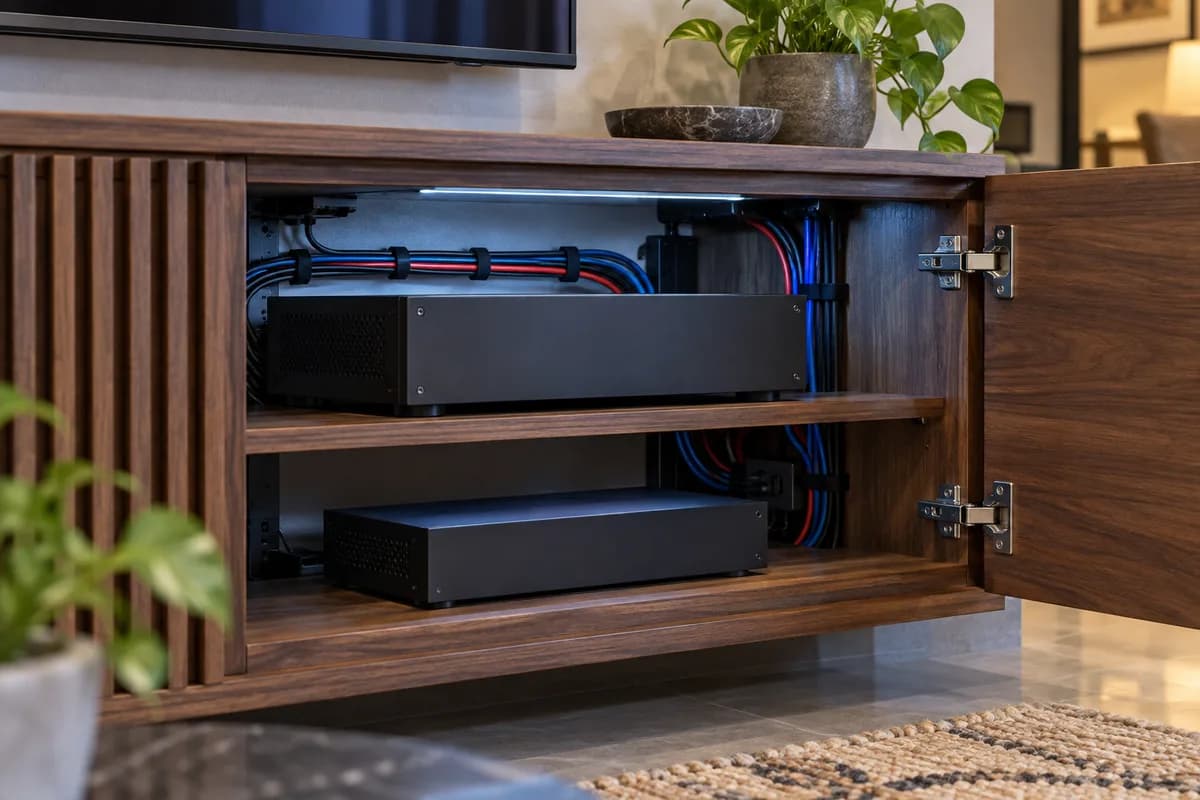
Keep the network scope connected to the equipment locations. A controller, media equipment and other devices may have physical connection and access requirements that influence the cabinet and cable plan. Request the appropriate manufacturer guidance for the selected equipment and have the professionals coordinate the design. Avoid squeezing technical equipment into a closed cupboard merely because it is visually convenient.
Ask how an issue is triaged when it could involve the internet provider, network equipment or automation configuration. The owner should have a clear first contact and understand how responsibility moves between trades. A system with several specialist suppliers needs coordination after handover as well as during installation. Record that arrangement rather than leaving the household to guess which business to call.
How should you compare an installed CORE 1 and CORE 3 proposal?
Use the same functional brief for both alternatives. Request separate identification of controller hardware, other system components, programming, integrations, network work, installation and support. The format may differ between suppliers, but the scope should be understandable. A cheaper controller line does not necessarily mean a cheaper completed system if other required items are missing from the offer.
Ask for the exact region-appropriate equipment and delivered Indian price. Include tax treatment, availability, warranty handling and any special-order terms. Nexoforma has not verified a manufacturer-published universal INR controller price, so a written integrator quote is necessary. Avoid treating a converted foreign hardware listing as a supported local installation price.
When a supplier offers a larger controller as an upgrade, ask what changes in the delivered scope. It may be justified by named requirements or planned capacity, but the reasoning should be visible. If the larger option is being proposed only as reassurance, ask the integrator to explain what risk it addresses and how the alternative was assessed. This turns an abstract upgrade into a reviewable decision.
What does a credible expansion plan look like?
Name the additions you can reasonably foresee: another room, an extra listening area, a planned extension or a specific integration. Ask what infrastructure and equipment would be needed for each. The plan should distinguish spare physical capacity, supported functionality and work that would require redesign. Future proof is not a meaningful specification without those details.
Consider what can be prepared while the property is accessible. The architect, electrician and integrator can discuss routes, cabinet space and maintenance access for the named future scope. This does not justify installing every possible component today. The aim is to preserve useful options and document assumptions so that a later professional can understand the original intention.
Record triggers for reassessment. A changed room use, a different audio design or a new third-party device may alter the assumptions used to select the controller. Ask the integrator how such changes are reviewed. A good expansion plan makes uncertainty explicit rather than promising compatibility with products and services that have not yet been selected.
How can a demonstration test the proposed system rather than the showroom?
Bring a short list of normal household routines. Ask the dealer to show the closest relevant configuration and explain where it differs from your proposal. Try the intended user controls and note any actions requiring extra steps or another app. The purpose is to understand the proposed experience, not to assume a showroom's broad feature set is included in every quotation.
For audio, test the independent listening scenarios in your schedule. For other integrations, ask to see the exact promised actions and any limitations. Keep a record of what was demonstrated and what still needs project-specific validation. If an important function depends on different equipment at your property, do not treat a similar showroom example as final proof.
Include a support and ownership discussion while the system is being demonstrated. Ask how the owner requests a scene change, replaces a phone, manages a service renewal or gives temporary access to a support professional. These everyday ownership tasks can influence satisfaction as much as an elaborate automation routine. The answers should become part of the proposed handover and support scope.
What should commissioning and handover include?
Use the approved room-and-function schedule as an acceptance checklist. Demonstrate the agreed routines, confirm that labels match the household's language and record incomplete items. Ask the installer to explain expected recovery behaviour under the scenarios included in the contract. Electrical or technical fault tests should be performed only by appropriate professionals using a safe plan.
Obtain the final equipment list, relevant configuration records, account-ownership information and support contacts that the supplier has agreed to provide. Ask which project files or backups are available and which tools or permissions a future professional would require. Different systems have different arrangements; the important point is that the customer understands the limits before relying on an assumed transfer process.
Separate private credentials from broadly shared project documents. The owner should control the appropriate recovery information and know how retained installer access is managed. Handover is also the time to confirm service renewals and any recurring charges. A system that is technically complete still needs a clear ownership arrangement.
Two illustrative controller-selection discussions
A household begins with a limited set of rooms, straightforward routines and one shared listening area. Its integrator proposes CORE 1 and explains the complete device list, dependencies and expected ownership process. The family asks what would change if an additional independent listening area were added later. The decision rests on that documented scope, not on an assumption that every small property should use the same controller.
Another household plans several independent listening choices and a wider integration schedule. Its integrator proposes CORE 3 and shows how the additional audio capability relates to the design. The family still reviews the amplification, network work, interfaces and programming. A larger controller does not remove the need to specify those supporting parts or to confirm the actual functions.
These are planning examples, not installations performed or certified by Nexoforma. They demonstrate how to ask for sizing evidence without pretending that a general article can engineer a specific home. The final choice should be supported by the appointed professional's assessment, current documentation and a written offer for the complete project.
Frequently asked questions before approving the controller
Is CORE 3 automatically faster or better for my household? This guide does not provide comparative performance measurements. Ask which concrete requirement justifies the proposed model and evaluate the complete system. A specification advantage matters only when it supports a function, capacity need or documented design assumption relevant to the project.
Does buying the controller complete the automation system? No. The delivered outcome can depend on connected devices, interfaces, network infrastructure, programming and installation. Ask for a complete BOQ and responsibility schedule. A hardware purchase alone does not establish that the scenes or integrations in a demonstration will exist in your home.
Can another professional maintain the system later? Ask the appointed supplier to explain the ownership, project-record and support arrangements for your configuration. Obtain the documents and account access that are contractually available. Do not assume every file, licence or service transfers automatically, but do make future maintenance part of the appointment discussion.
Sources and verification
Frequently asked questions
What network questions belong in the proposal?
Ask the integrator to describe the network arrangement it expects, including any new equipment or configuration work. Identify who supplies, installs and supports it. The household's internet plan and the design of the local network answer different questions. A faster broadband package does not by itself establish that the proposed local connections, coverage or management are suitable.
What network questions belong in the proposal?: point 2
Keep the network scope connected to the equipment locations. A controller, media equipment and other devices may have physical connection and access requirements that influence the cabinet and cable plan. Request the appropriate manufacturer guidance for the selected equipment and have the professionals coordinate the design. Avoid squeezing technical equipment into a closed cupboard merely because it is visually convenient.
What network questions belong in the proposal?: point 3
Ask how an issue is triaged when it could involve the internet provider, network equipment or automation configuration. The owner should have a clear first contact and understand how responsibility moves between trades. A system with several specialist suppliers needs coordination after handover as well as during installation. Record that arrangement rather than leaving the household to guess which business to call.
Continue your research
Put your questions into a project brief.
Tell us your priorities and location in India. We will review your request as our professional network grows.
Plan my project →Build a free budget · Draft a project brief · Compare quotations · Check a quote with Ved
Found something that needs correcting? Tell our team. This guide is a planning checklist, not a site-specific design or electrical instruction.
← All guides